
Industry Report
Retail
The HoReCa market in Poland is growing year after year, but a restaurant’s success is increasingly determined not only by the quality of the food, but also by how consumers choose to enjoy it. Sometimes they opt for the in-restaurant experience; other times, they prefer the convenience of delivery or takeout. However, a study by our experts shows that certain factors remain constant. Pizza is the dish most frequently chosen by consumers—whether they’re dining in, ordering delivery, or picking up takeout. The second constant factor is price, which remains the most important criterion for choosing a restaurant.
According to experts, the HoReCa market in Poland grew again in 2025. Although real growth, after adjusting for inflation, was less than half the nominal rate, it accelerated significantly compared to 2024. At the same time, the vast majority of Poles use foodservice establishments, and the market penetration rate has remained stable for several years.
The largest portion of the HoReCa market’s value is accounted for by the Re segment—that is, the restaurant market, which includes full-service restaurants, pizzerias, fast-food bars, cafes, and bars serving alcohol, as well as three basic order fulfillment models: dine-in, delivery, and takeout.
A survey by PMR Market Experts by Hume’s shows that the most popular way to enjoy dining out in 2025 remained eating meals and drinking beverages on-site at a restaurant—71% of Poles reported this. Takeout orders came in second (55%), followed closely by deliveries to home or work (50%).
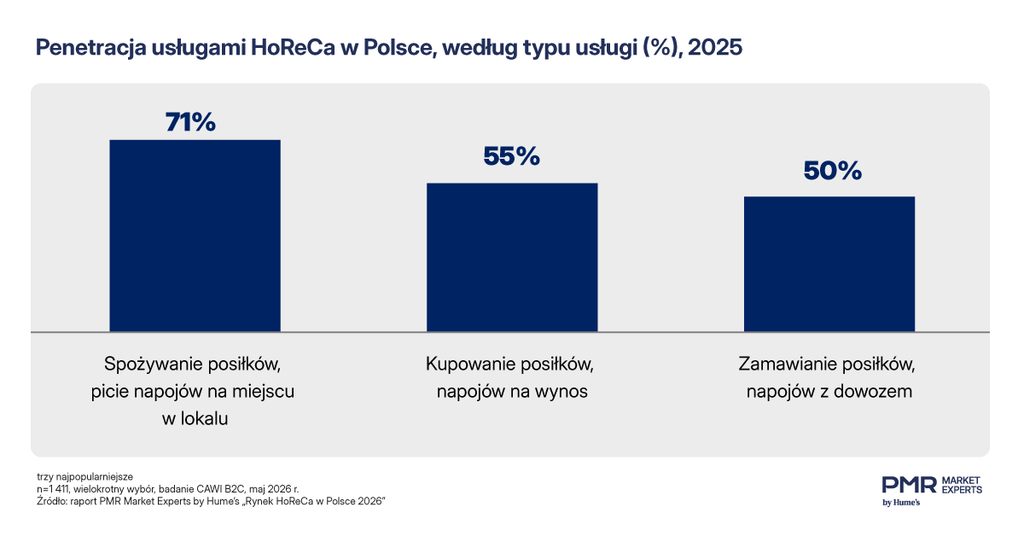
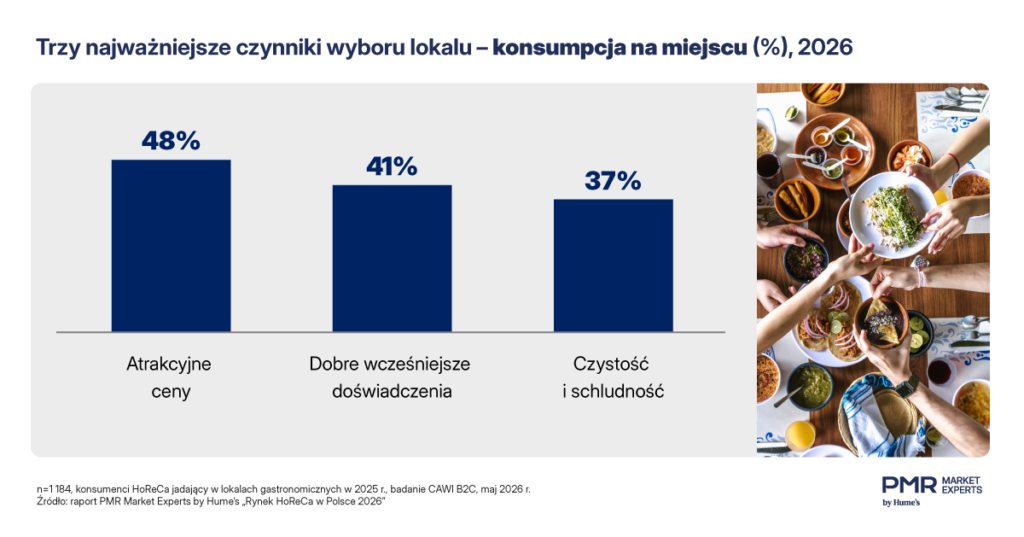
Consumers are eager to return to restaurants, and their choices are becoming increasingly informed. The following factors most often determine their choice of restaurant:
People aged 25–54 remain the most active customers of “dine-in” dining establishments. They are the ones who visit restaurants most frequently. At the same time, age clearly influences preferences. Younger consumers are more likely to choose fast-food joints, burgers, or kebabs, and are more often influenced by online reviews and promotions. Older consumers, on the other hand, primarily opt for established restaurants, classic dinner dishes, and a predictable menu.
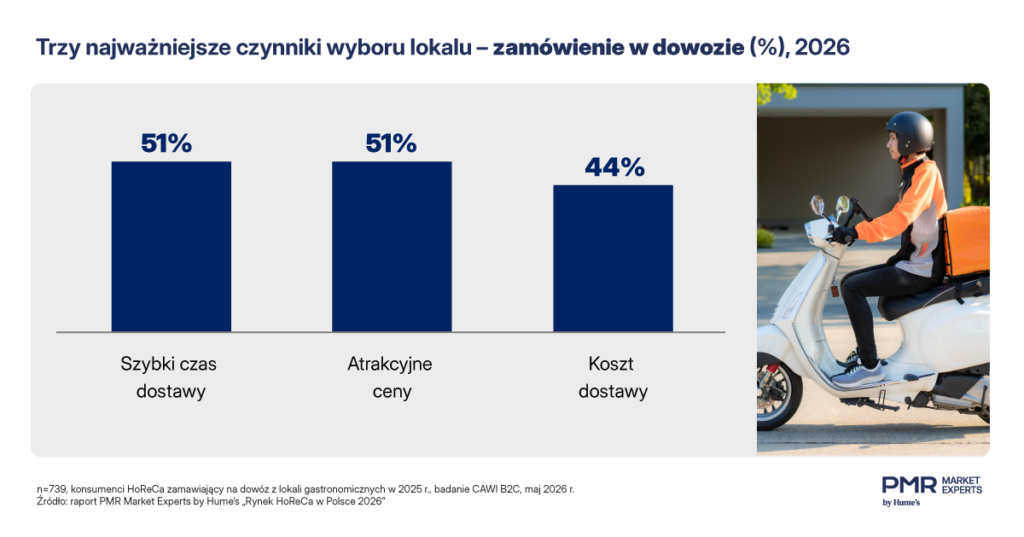
The delivery segment remains the domain of younger consumers, particularly members of Generation Y and families with children living in larger cities. For them, dining out is primarily about saving time and ensuring convenience.
The most important criteria for choosing a restaurant for delivery are:
Consumers expect their orders to be fulfilled efficiently and want to minimize the risk of disappointment.
In this ordering model as well, pizza remains the most frequently chosen dish. Its position fits into the broader market picture—it is the most popular choice regardless of whether consumers dine in, order for delivery, or pick up their meal. It is only the subsequent choices that vary by age and lifestyle. Younger people are more likely to opt for fast food, older people choose classic dinner dishes, while women are relatively more likely to order pasta, salads, or sushi.
The takeout segment remains the most versatile. It is used by people from nearly all social groups, although slightly more often by Millennials and households with children.
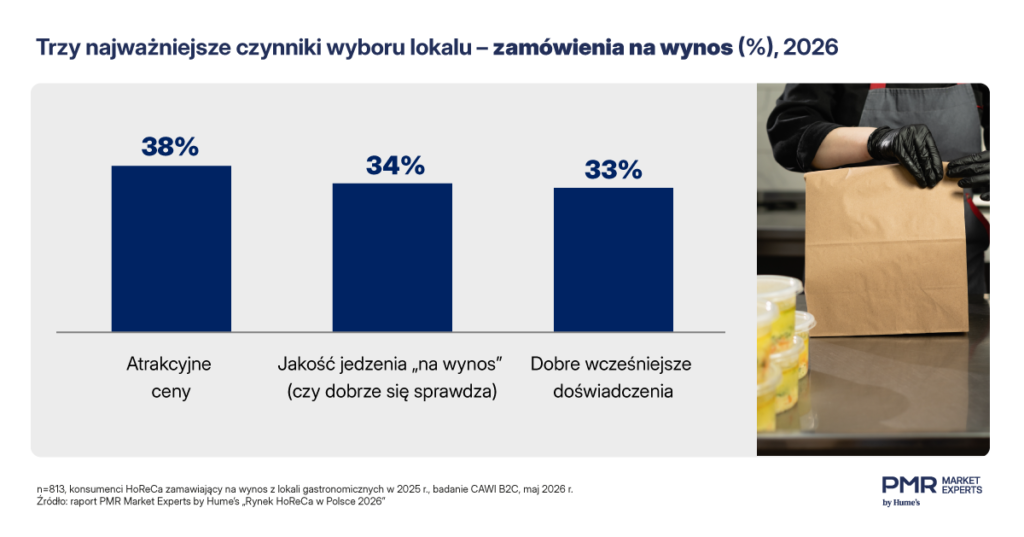
Here, too, price remains the most important factor in choosing a restaurant (38%). Close behind, consumers cite the quality of takeout food (34%) and positive past experiences (33%). In contrast to the delivery market, the restaurant itself and trust in its offerings take on greater importance. Younger consumers are more likely to respond to promotions and online reviews, while older consumers remain loyal to tried-and-true spots and familiar menus.
– The Polish food service market shows that there is no single consumer model. The same customer might order a pizza for delivery during the week, pick up a takeout lunch, and dine out at a restaurant on the weekend. Different business models—dine-in, takeout, or delivery—meet different customer needs and cater to various occasions, such as a quick meal during the day, meeting up with friends, or a family celebration. The success of restaurants is increasingly determined by their ability to tailor their offerings to both a specific occasion and the customer’s preferred way of using the service, while maintaining attractive prices and high-quality service. Our research also shows that while business models vary, trust in the restaurant and previous positive experiences remain among the most important factors in building customer loyalty.
Agnieszka Figiel
Research Director

Industry Report
Retail
OTHER BLOG POSTS:







