Industry Report
Pharma & Healthcare
Dietary supplements market in Poland 2026
Market analysis and development forecasts for 2026-2031

75% of Poles purchased dietary supplements in 2025. This is according to the latest report, “The Dietary Supplements Market in Poland: Market Analysis and Growth Forecasts for 2026–2031,” prepared by PMR Market Experts by Hume’s. At the same time, sales channels and expectations of manufacturers are changing. Brick-and-mortar pharmacies are losing ground to online and other channels, and product quality and claimed effectiveness are increasingly the deciding factors in purchasing decisions. According to forecasts, the dietary supplement market in Poland will grow by an average of approximately 5% annually in the coming years.
The Polish dietary supplement market is entering a new phase of development. Although—as our experts point out—it is already mature in terms of the number of consumers, it still has room for growth in terms of value.
In 2025, 75% of Poles purchased dietary supplements, and that percentage remained the same as the previous year.
– A stable user base, growing revenue, and the increasing importance of preventive care mean that the outlook for the category remains positive. At the same time, the way consumers make purchasing decisions is changing.
Marta Marszałek
Head of Pharma & Healthcare Market Analysis
According to the report, one of the most significant trends in the market is a shift in the structure of sales channels. Brick-and-mortar pharmacies remain an important place to purchase dietary supplements, but their importance is steadily declining. The data indicate a 5 percentage point year-over-year decline in the percentage of respondents who say they will purchase dietary supplements at brick-and-mortar pharmacies in 2025. At the same time, the importance of online sales and modern channels is growing. Consumers are primarily attracted by the convenience of shopping, a wider selection, the availability of promotions, and the ability to compare prices more easily.
In 2025, the importance of online stores operated directly by manufacturers increased significantly. Large grocery chains and marketplace platforms are also showing growing interest in the dietary supplements category. For manufacturers, this means greater opportunities to reach consumers, but also fiercer competition.
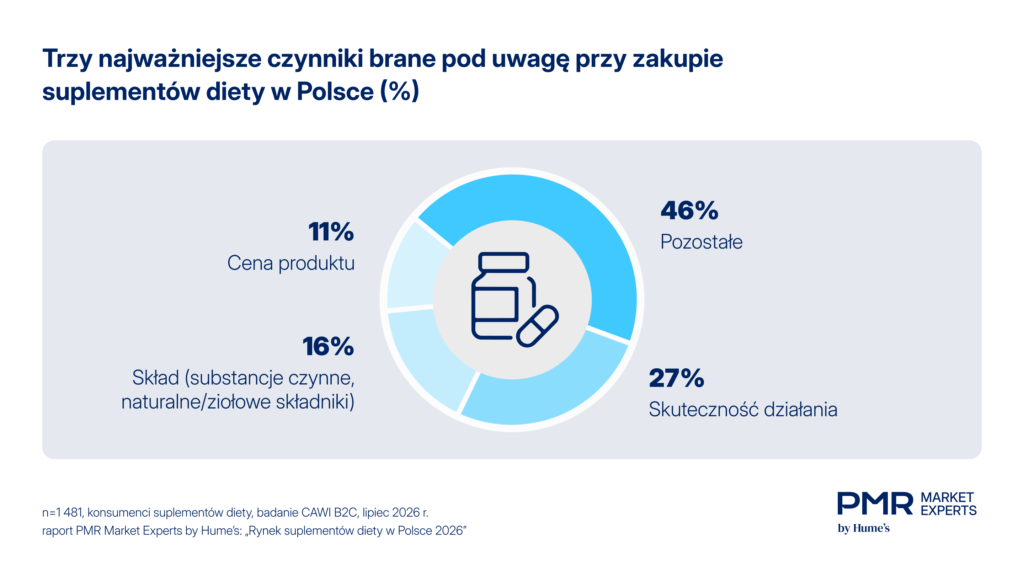
The growing number of places where supplements can be purchased makes brand communication increasingly important. Simply having a product available through a particular channel no longer guarantees a competitive advantage. Consumers expect clear information about how the product works and the reasons why they should choose it.
Effectiveness is one of the most important criteria for choosing supplements. It is considered by 45% of consumers, and for 27%, it is the most important factor in deciding which product to choose. At the same time, more than half of those surveyed say they are willing to spend more on a high-quality supplement. Price and promotions are an important criterion for about three in ten consumers.
– The dietary supplement market is much more competitive today than it was just a few years ago. Consumers have access to a wide selection of products and can easily compare them. That is why credibility, quality, and clear communication of the benefits of using a product are becoming increasingly important for brands. At the same time, the stable percentage of Poles who use supplements shows that the category has a strong foundation for further growth, particularly in areas related to prevention, immunity, and daily health care.
Marta Marszałek
Head of Pharma & Healthcare Market Analysis
Health remains the primary driver behind the use of dietary supplements. This category is closely linked to preventive care and daily health maintenance, although consumers’ motivations vary depending on their age and gender.
Younger Poles are more likely to cite the need to supplement their diet as the reason for taking supplements. Among older consumers, however, supplements used to address specific health issues are more important. In turn, improving physical fitness is a more significant motivation for men than for women.
This shows that the market is not homogeneous, and expectations regarding products change along with the consumer profile. For manufacturers, this means there is room to further differentiate their offerings and communications.
For people who do not take dietary supplements, the most significant barrier is not the cost. The main barrier remains the belief that supplementation is unnecessary or does not produce the expected results. This is an important signal for manufacturers. When consumers question the need for supplements, price promotions alone are not enough to increase interest in the category. Building credibility and providing clear information about how the product works becomes crucial.
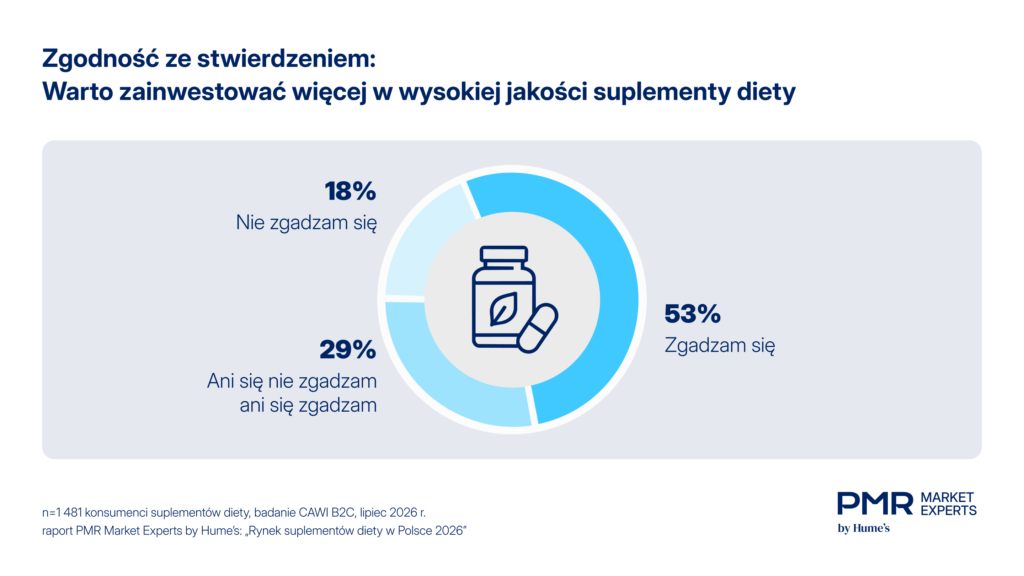
Despite changes in the structure of sales channels and rising consumer expectations, the outlook for the dietary supplement market in Poland remains positive. According to PMR Forecasts by Hume’s, the market is expected to grow by an average of about 5% annually in the coming years.
In the coming years, the market will grow not only in terms of value but also in terms of the ways it reaches consumers. As the number of sales channels grows, brand credibility, the quality of communication, and the ability to address health and preventive care needs will become increasingly important.

Industry Report
Pharma & Healthcare
Market analysis and development forecasts for 2026-2031
OTHER BLOG POSTS: