Industry Report
Pharma & Healthcare
PMR Insight Spark: Wellbeing po polsku – jak naprawdę dbamy o siebie?
Profilaktyka w liczbach

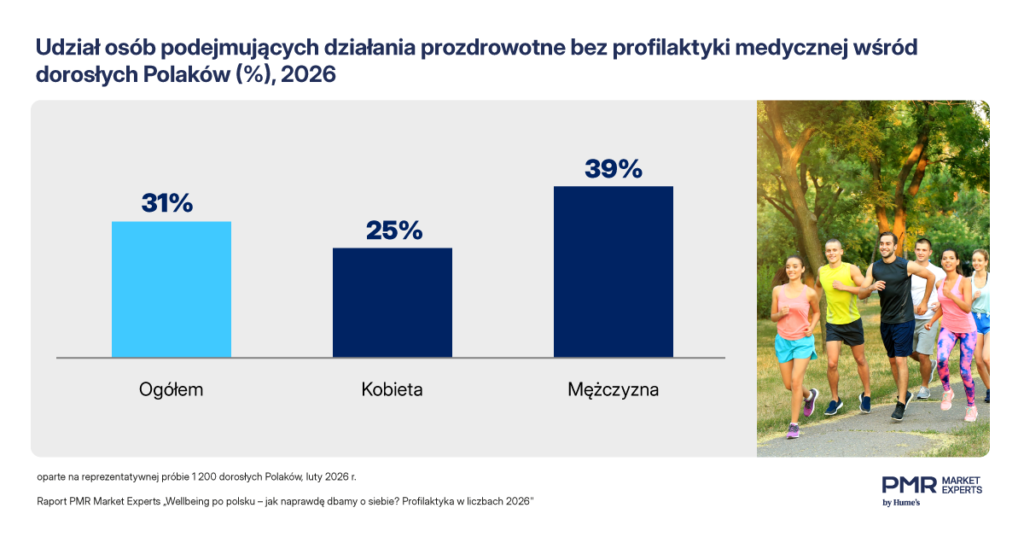
Nearly nine out of ten Poles take steps to promote their health, but for many, prevention means healthy habits above all else, rather than regular checkups. Our latest report, “Well-being, Polish Style—How Do We Really Take Care of Ourselves? Prevention in Numbers 2026,” shows that as many as 31% of adult Poles take care of their health exclusively outside the doctor’s office.
Poles are increasingly willing to take steps to promote their health. They pay attention to their diet, physical activity, and recovery. However, data from a report by PMR Market Experts by Hume’s show that healthy choices do not always go hand in hand with regular health checkups.
As many as 31% of adult Poles take steps to promote their health but do not undergo preventive screenings. This phenomenon is more common among men—the percentage reaches 39%, while among women it is 25%.
– Why don’t Poles undergo preventive screenings? Most often, it’s simply because they feel fine. Respondents say that the absence of symptoms means they see no need for screenings. At the same time, one in three respondents cannot name any specific reason why they do not undergo these screenings. This suggests that the biggest obstacle is not cost or limited access to healthcare, but rather a lack of a clear impetus to take action. Preventive care is still more often a reaction to anxiety than a part of everyday health management
Przemysław Rura
Senior Market Researcher
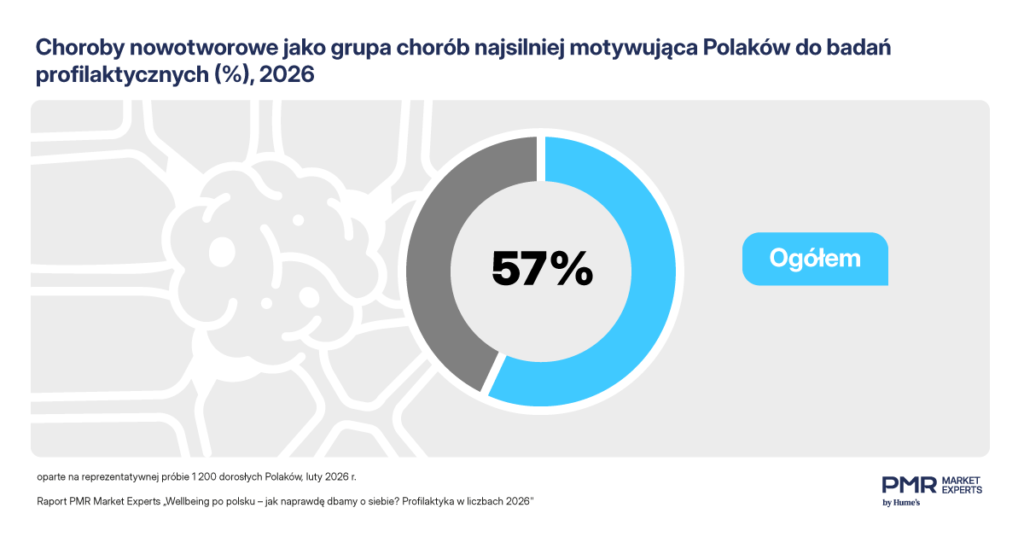
Among various disease categories, it is cancer that most strongly motivates Poles to undergo preventive screenings—57% of respondents cite it. The results of our research show that awareness of the risk of cancer effectively prompts people to take action. However, the challenge remains to establish the habit of regular screenings even for conditions that do not inspire the same level of concern.
– Among various disease categories, it is cancer that most strongly motivates Poles to undergo preventive screenings. From the perspective of health communication, this is valuable information, but it also suggests that building a long-term culture of preventive care cannot be based solely on fear. We need initiatives that demonstrate the real benefits of regular screenings and convince people that prevention is an investment in quality of life, not merely a reaction to the risk of disease.
Przemysław Rura
Senior Market Researcher
Growing awareness of mental health is reflected in the everyday behaviors of Poles. Among those taking preventive measures in this area, self-directed methods of promoting well-being are the most common. The most popular ways to care for mental health are rest and stress reduction. These are cited by 80% of people taking action in this area. At the same time, nearly one in two people (46%) seek help from a psychologist or therapist, which shows that professional support is becoming an increasingly common part of mental health prevention. Meanwhile, 26% of respondents who prioritize this aspect of mental health use apps and digital tools designed to support mental well-being.
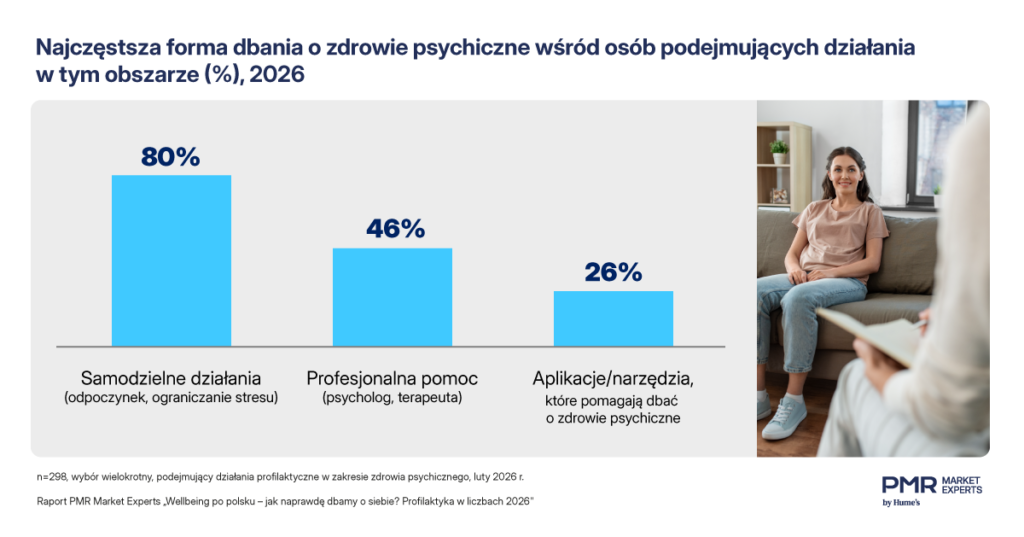
The data show that Poles most often start with steps they can take on their own, but they are increasingly viewing specialists and technology as a natural complement to their daily efforts to promote well-being.
Industry Report
Pharma & Healthcare
Profilaktyka w liczbach
OTHER BLOG POSTS: