Industry Report
Construction
Construction aggregate market in Poland 2025
Market analysis and development forecasts for 2025-2030

Our latest research shows that total production of natural aggregates in Poland—including sand, gravel, and crushed aggregates—reached 264.9 million metric tons in 2024. This represents a 7.4% increase year-over-year. We are seeing a positive effect from the simultaneous increase in investment activity in the public sector and the strong performance of the construction industry. In 2025, the market entered a phase of intense demand for raw materials, which is of significant importance for the implementation of the country’s strategic infrastructure, energy, and defense projects.
The increased demand for aggregates in Poland in the coming years is the result of several factors. The greatest demand is generated by specialized construction projects and civil engineering projects (construction of roads, bridges, and hydrotechnical structures). There has been a marked acceleration in the use of EU funds. According to our forecasts, this high level will continue through 2026. In addition, projects carried out under the National Recovery Plan are providing a strong boost to investment.
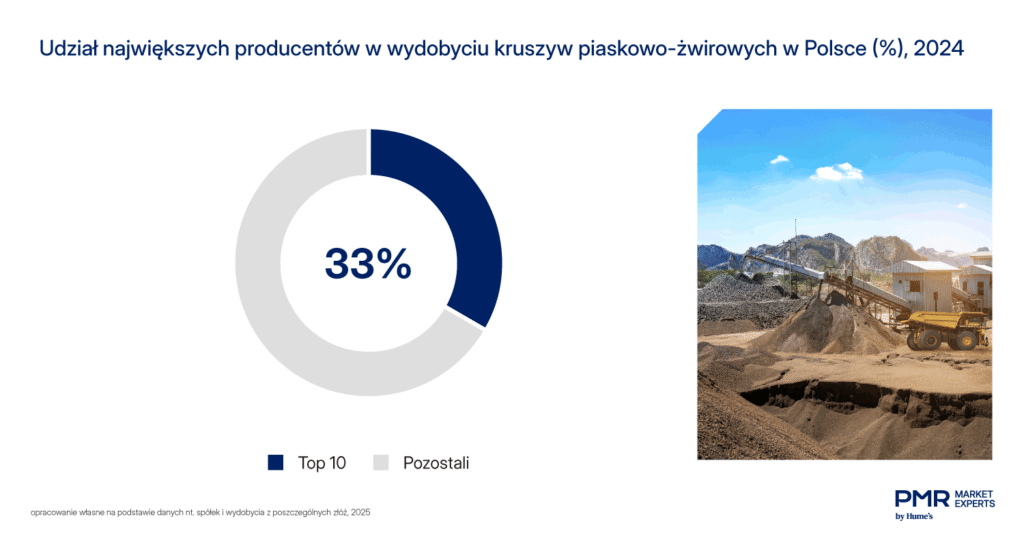
The market is also driven by investments in the defense sector. In 2025, spending on military infrastructure rose by as much as 37% compared to 2023, in part as part of the “Eastern Shield” program. In the coming years, demand will also be driven by strategic investments, such as the construction of the Central Transportation Hub, offshore wind farms, and the first nuclear power plant in Lubiatowo-Kopalino—construction is scheduled to begin in 2028. All of these projects require enormous quantities of aggregates for foundations, embankments, and supporting infrastructure.
Szymon Jungiewicz
Head of Construction Market Analysis
Our experts point out that the increased demand for aggregates must go hand in hand with the development of logistics. The availability of rail infrastructure and rolling stock, particularly for the transport of crushed aggregates from southwestern Poland, will be of critical importance. Truck transport plays a supplementary role, and in many regions, it is the primary mode of transport.
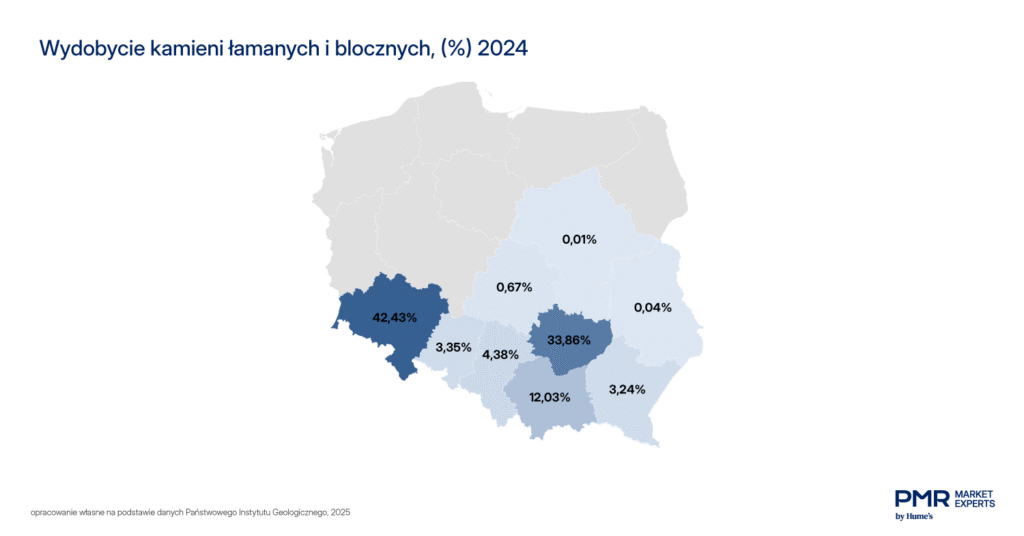
It is estimated that Poland’s industrial reserves of crushed and block aggregates total 3,994 million metric tons. Their distribution is geographically determined. As much as 93.5% is located in three provinces:
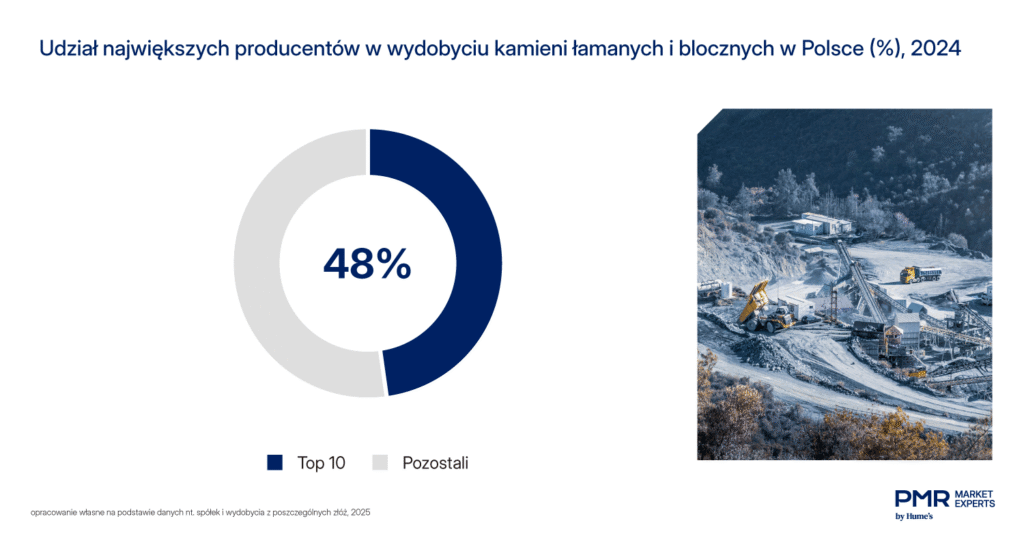
These regions serve as a key source of raw materials for infrastructure projects throughout the country, while also posing significant logistical challenges due to the need to transport aggregates over long distances.
Szymon Jungiewicz
Head of Construction Market Analysis
Industrial sand and gravel reserves exceed 4.4 billion metric tons, of which 3.6 billion metric tons are exploited deposits. These aggregates are found in all provinces, as well as in offshore areas, but they are predominantly concentrated in the northeastern and northwestern parts of Poland.
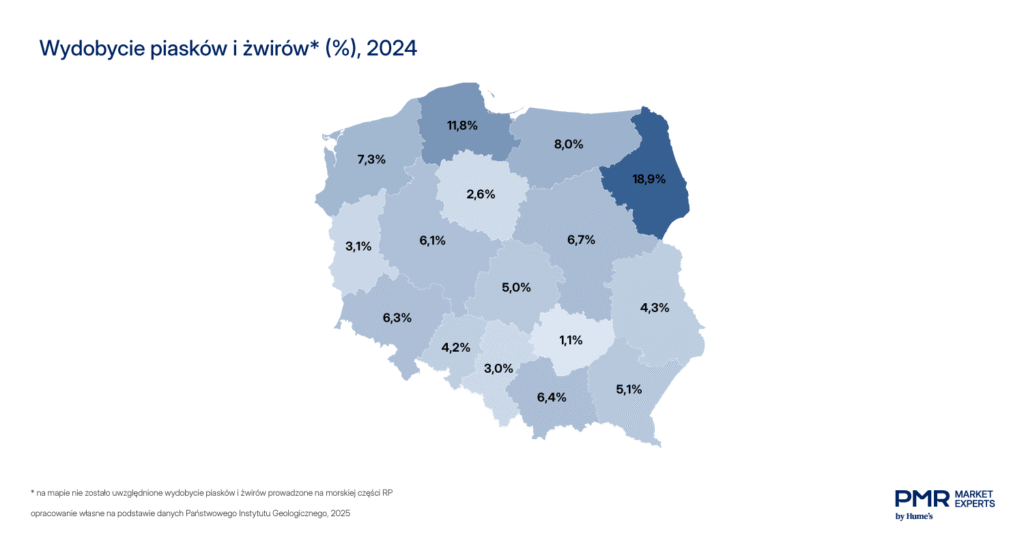
In 2024, the largest reserves of sand and gravel were concentrated in the following provinces: Podlaskie (15%), West Pomeranian (11%), Pomeranian (approx. 9%), Greater Poland (approx. 9%), and Warmian-Masurian (approx. 9%) provinces.

Industry Report
Construction
Market analysis and development forecasts for 2025-2030
OTHER BLOG POSTS: