Industry Report
Construction
Modular construction market in Poland 2026
Market analysis and development forecasts for 2026-2031
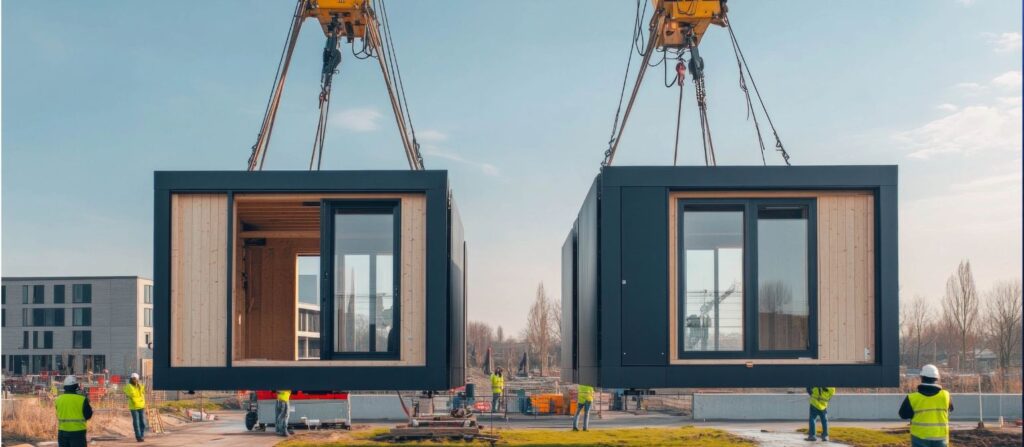
The modular construction market in Poland experienced a temporary slowdown in 2024. Its value fell by 1.3%, to 4.4 billion PLN. These changes were mainly due to a decline in exports and a slowdown in both residential and nonresidential construction. However, our experts forecast a rebound in the coming years.
In 2025, the market is expected to grow to 4.6 billion PLN, and by 2030, it is projected to reach 7.2 billion PLN. This growth will be driven by, among other factors, improved access to credit, growing interest in fast and eco-friendly construction methods, and ongoing suburbanization.
Why is modular construction becoming an increasingly attractive option compared to traditional methods? Several factors contribute to this, including:
Modular homes are gaining popularity in both the single-family and multifamily segments. Investor awareness is also growing, and observing international trends—especially those from Scandinavia—is shortening the decision-making process. More and more individual customers are opting for modular homes, and foreign demand—particularly from the German market—continues to drive exports.
Production in Poland has already reached a significant scale, but most of the output is exported to developed markets, where modular technology is more highly valued.
After several years of double-digit growth, the modular construction market slowed slightly in 2024. The segment’s value totaled 4.4 billion PLN, representing a 1.3% year-over-year decline. The reasons for this include, among other things, a slowdown in export sales and subdued growth in the residential market.
– According to our forecasts, the market value will rise to 4.6 billion PLN in 2025, representing a 4.5% increase over the previous year. The future looks even more promising. In 2026–2027, we anticipate annual growth of 8–10%, and according to our data, the market will reach a value of 7.2 billion PLN by 2030. This positive growth will be strongly correlated with the recovery of the residential and non-residential markets, as well as with the completion of projects under the National Reconstruction Plan (KPO). Module manufacturers’ current order books indicate a higher volume of contracted projects in the coming years, which is reflected in the market’s rebound.
Kamila Kabat
Construction Market Analyst
Single-family homes account for the largest share of the market, with a value of nearly 2.24 billion PLN in 2024. Wooden 2D modules dominate the market, as they are the most affordable alternative to traditional construction technologies. Due to the lower investment cost for individual investors, wood remains the most attractive option, accounting for the largest market share. Concrete is more often chosen by developers and investors building taller multi-family structures with more than four stories.
The modular market is closely linked to residential construction, so trends in investment demand and developers’ decisions directly influence the scale of modular technology adoption. In 2024, approximately 91,100 single-family homes were completed, representing an 11.8% decline compared to the previous year. At the same time, the number of new permits and building notifications rose to 101,200, representing an 11.7% year-over-year increase. Record-high prices for building materials and market uncertainty are limiting growth potential; however, factors such as interest rate cuts are encouraging investment in prefabricated single-family homes.
The persistent housing shortage and the high percentage of overcrowded households (which remained at 34% in 2024, which is more than double the European average) create a natural opportunity for rapid and flexible solutions, such as modular construction.
Kamila Kabat
Construction Market Analyst
Our experts emphasize that modular construction is evolving in a direction that meets investors’ expectations and aligns with global trends. Shorter construction times while maintaining high quality are becoming a key competitive factor. Environmental sustainability and sustainable development are playing an increasingly important role, particularly in reducing construction waste, using wood and renewable materials, and building low-energy and zero-emission structures.
– These trends are driven by suburbanization. The net migration from cities to suburbs in Poland has remained negative for 25 years, ranging from 40,000 to 55,000 people annually. The labor shortage in the construction industry and pressure to shorten project completion times are increasing the appeal of modular construction, as evidenced by observed changes in the behavior of individual investors.
Kamila Kabat
Construction Market Analyst

Industry Report
Construction
Market analysis and development forecasts for 2026-2031
OTHER BLOG POSTS: