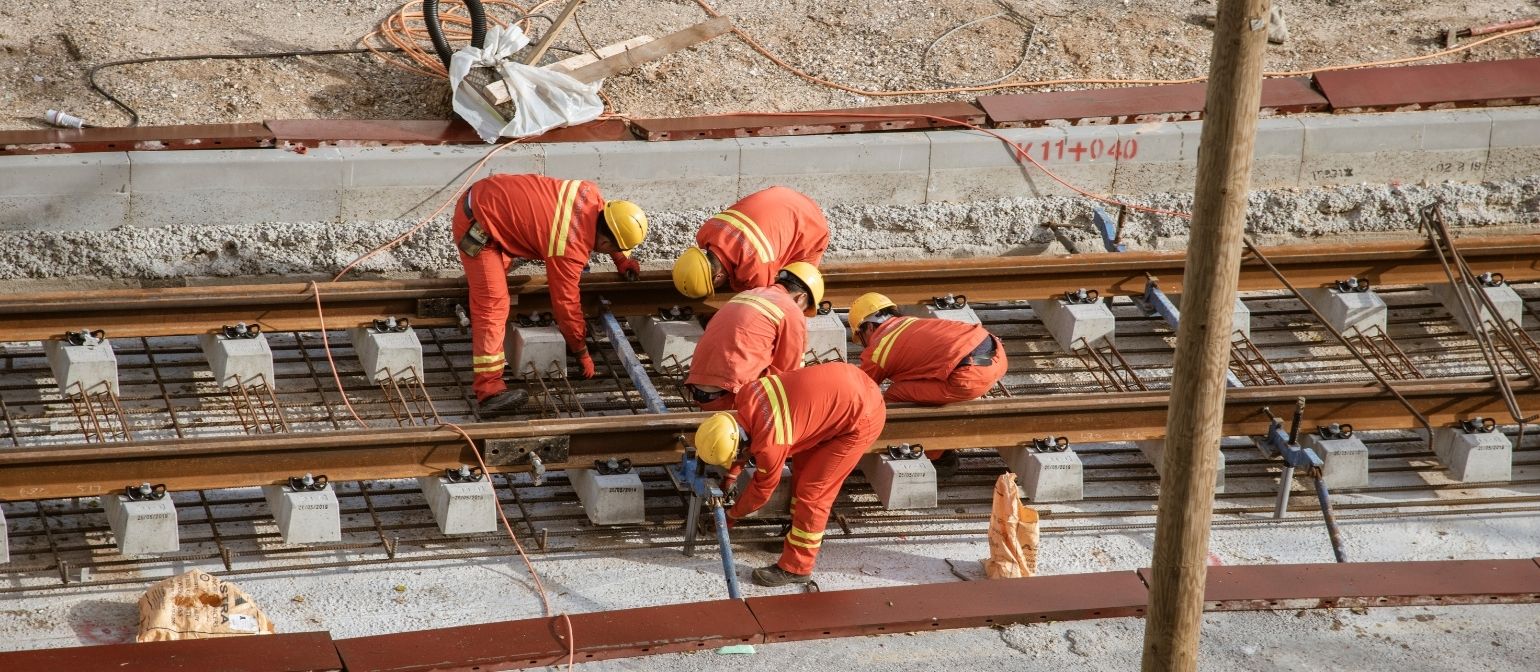
Railway construction in Poland remains one of the most important infrastructure sectors in terms of mobility, regional competitiveness, and supply chain resilience. For contractors, materials manufacturers, design firms, and financial investors, the key question is no longer simply whether the market will grow, but where, when, and in which segments a realistic supply of contracts will emerge.
The rail market is heavily dependent on the schedules of public investment programs, the availability of financing, environmental decisions, design capabilities, and the financial health of the largest contractors. Therefore, an effective assessment of this sector requires combining tender data, regulatory analysis, cost monitoring, and demand forecasts for trackwork, power systems, traffic control, and civil engineering projects.
Infrastructure modernization and expansion programs managed by public investors remain the most important source of demand. These include both work on main lines and regional projects, metropolitan hubs, stations, stops, power supply systems, and rail traffic control equipment. The market is therefore not homogeneous—the trackwork segment behaves differently from the automation segment, and the bridges and building structures segment behaves differently still.
Transport policy objectives are also of great importance. Rail is seen as a tool for reducing road congestion, improving access to smaller communities, and promoting low-emission transportation. In practice, this means that rail investments are increasingly evaluated not only in terms of line capacity, but also in terms of their integration with urban transit and intermodal logistics, as well as their impact on the development of areas surrounding stations.
It is important for market participants to monitor not only the tenders that have been announced, but also the earlier stages:
That is where the first signs of future order volume become apparent.
Railway construction is cyclical in nature, as a large portion of projects depends on multiyear financial frameworks, national funds, and EU funds. As a result, the market may experience periods of a high concentration of tenders, followed by slowdowns as new projects are still going through the preparatory procedures.
This phenomenon affects bid pricing, subcontractor availability, design capacity, and delivery schedules. Companies planning to expand in this segment should analyze not only the value of individual contracts but also their timing and the likelihood of delays.
Investment demand encompasses several market segments. The first consists of line-wide projects, namely the modernization of tracks, subgrade, drainage systems, the overhead contact system, and associated equipment. The second consists of point-specific projects: station renovations, the construction of stops, platform upgrades, and improvements to passenger accessibility. The third tier comprises specialized technical systems, including traffic control, telecommunications, power supply, and safety.
In practice, the attractiveness of individual segments depends on barriers to entry. Track maintenance work requires equipment and experience working while trains are in operation. Railway automation requires specialized expertise, certification, and knowledge of acceptance procedures. Engineering structures, in turn, are heavily dependent on geotechnical conditions, material availability, and design risks.
Industry reports are helpful when assessing the market, as they allow for comparisons of the scale of investments, the structure of contracts, investor activity, and the position of contractors in specific segments.
A good example is the modernization of commuter rail lines. Projects of this type typically involve not only replacing tracks, but also rebuilding stations, improving accessibility, upgrading control systems, and working on the overhead contact system. For contractors, this means coordinating multiple trades and carrying out work while adhering to restrictions imposed by the need to maintain train service.
Another example is freight projects and access routes to intermodal terminals. Here, technical parameters, capacity, the length of loading tracks, and the efficiency of connections to the main network are key. Investments of this type are important not only for the railways but also for industry, logistics, and ports.
An analysis of a railway tender should not be limited to the contract value and the deadline for submitting bids. Equally important are the contractual terms, the description of risks, the implementation process, experience requirements, the scope of design responsibility, and indexation mechanisms. During periods of volatility in the costs of materials and services, contractual provisions can significantly affect the contract’s profitability.
It is worth paying attention to the documentation preparation phase. Contracts executed under the “design-build” model transfer part of the design risk to the contractor. Conversely, “build-only” contracts, based on existing documentation, may reduce design uncertainty but do not eliminate risks related to conflicts, site access, or interdisciplinary coordination.
A practical analysis of the tender should include:
A high contract value does not always mean high business value. A contract may require a significant commitment of guarantees, working capital, and managerial resources, while also containing challenging deadlines. Risks increase especially when the project spans multiple industries, involves night work, requires maintenance, and depends on administrative decisions.
The contractor should assess whether the contract strengthens its portfolio or merely increases its exposure to risk. It is particularly important to ensure that the project aligns with the contractor’s capabilities, relationships with subcontractors, and the organization’s current workload.
Contractors’ order books are one of the most important indicators of the health of the railway construction market. They show which companies have a secure backlog, which segments dominate their operations, and how significant their exposure to public projects is. For investors, suppliers, and competitors, such an analysis makes it possible to assess the likelihood of an aggressive pricing strategy or a selective approach to new tenders.
When large contractors have full order books, they may assess risks more cautiously and focus on contracts with better terms. As order books shrink, the pressure to secure new contracts typically increases. This can affect the level of price competition, but also the risk of subsequent execution problems.
In PMR Market Experts reports, we regularly analyze the situation in the construction sector, the activities of the largest investors, and the outlook for companies operating in the infrastructure market.
A stable portfolio doesn’t just mean a large number of contracts. What matters is the structure, profitability, execution schedule, and the level of concentration on a single client or a single type of project. A contractor handling several challenging projects simultaneously may be more vulnerable to liquidity pressure than a company with a smaller but better-balanced portfolio.

Risks in railway construction are technical, financial, regulatory, and organizational in nature. The most commonly analyzed risks include fluctuations in material costs, the availability of qualified personnel, constraints on the supply of specialized equipment, delays in obtaining documentation, and difficulties in carrying out work while the infrastructure is in operation.
Administrative risks are also significant. Environmental decisions, agreements with network operators, permits, and acceptance procedures can affect the timeliness of projects. In railway contracts, a delay in one component often affects the entire schedule, as the work is closely interlinked from a technical standpoint.
Market analyses can be supplemented by surveys conducted by the independent research firm Hume’s Institute, which provide a better understanding of market participants’ sentiments, expectations, and forecasts.
The most effective measures should be taken before a decision on the bid is made. It is advisable to prepare a risk matrix, assign each risk an impact on cost and timeline, and then assess which risks can be transferred to partners, insurers, or suppliers. Early confirmation of the availability of key resources is particularly important.
Forecasting the rail market requires combining quantitative and qualitative data. Tender announcements alone show only part of the picture, as some projects may be postponed, divided into phases, or modified. Therefore, it is important to monitor both investors’ plans and actual progress in preparing the documentation.
Market forecasts are useful in this analysis, as they help estimate future demand, possible bottlenecks in the workload, and potential gaps in contractors’ portfolios. For companies that supply materials, machinery, or design services, this has operational significance—it allows them to plan production capacity, staffing, and pricing policies.
The most important indicators include the publication of procurement plans, announcements regarding project documentation, environmental decisions, information on financing, and changes to investors’ schedules. It is also worth monitoring the results of tenders, the number of bids, and the differences between the contracting authority’s budget and the contractors’ prices.
If bids that clearly exceed budgets appear in multiple procurement processes, this may indicate that costs have been underestimated or that there is limited availability of contractors. If the number of bids declines, the market may be signaling a heavy workload or unattractive contract terms.
Railway construction in Poland remains a market of great strategic importance, but it requires a highly selective approach to bidding and investment decisions. The greatest advantage goes to companies that can combine tender analysis with an assessment of competitors’ portfolios, cost risks, and financing schedules.
Market data is most valuable when it supports specific decisions: entering a market segment, selecting bids, assessing the competition, developing equipment infrastructure, negotiating with partners, or planning acquisitions. In railway construction, it is particularly important to distinguish between declared demand and demand that can be met within a given time frame.
In practice, this means that scenarios need to be developed. One scenario might assume the efficient absorption of funding and a concentration of tenders, while another might involve administrative delays and greater competition for specific contracts. An analysis prepared in this way helps limit decisions based solely on intuition.
Companies planning to expand in the rail infrastructure sector can use consulting services to assess the potential of various segments, analyze the competition, review their contract portfolio, and develop a strategy for market entry or expansion.
If you need a market assessment of railway investments, tenders, or contractor profiles, please contact PMR Market Experts. Together, we will determine what data and analyses will best support strategic decisions in this sector.
OTHER BLOG POSTS: